
Being referred for a cardiac workup can bring up a lot of questions. What tests will you need? Will they be uncomfortable? Does a cardiac workup mean your doctor already suspects something is wrong?
In reality, a cardiac workup is not one specific test. It is a process used to evaluate symptoms, risk factors, and potential heart problems. The exact steps depend on why you are being evaluated and what your healthcare provider finds along the way.
For someone experiencing chest discomfort, shortness of breath, palpitations, dizziness, or reduced exercise tolerance, a cardiac workup can help determine whether the heart is contributing to those symptoms.
A cardiac evaluation may be recommended when symptoms or risk factors suggest that the heart needs a closer look.
Common reasons include:
Sometimes a workup begins because of an abnormal result from another test, such as an EKG or chest X-ray. In other cases, it may be part of evaluating cardiovascular risk before symptoms become more serious.
The goal is not simply to find a problem. It is to understand how the heart is functioning and determine whether additional care is needed.
A cardiac workup typically begins with a conversation about your health. Your cardiology team will ask about your current symptoms, when they started, how often they occur, and what seems to make them better or worse. You may also be asked about previous medical conditions, medications, lifestyle factors, and family history.
A physical examination may include checking your:
This information helps determine which tests, if any, are appropriate. Not every patient needs the same collection of tests, and a thorough evaluation does not necessarily mean undergoing every type of cardiac test available.
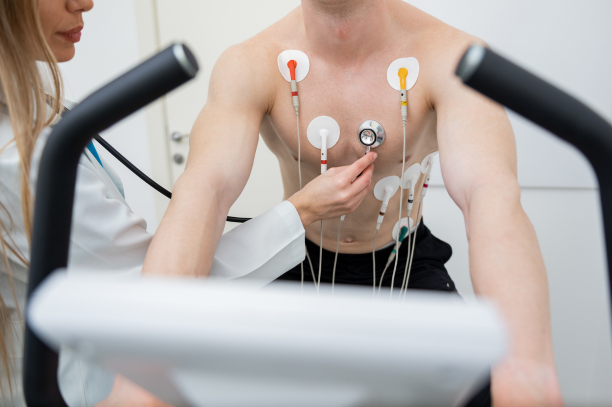
An electrocardiogram, or EKG, is often one of the first tests performed during a cardiac evaluation. The test uses small electrodes placed on the skin to record the heart’s electrical activity. It can show how quickly the heart is beating, whether the rhythm is regular, and whether there are abnormalities in the heart’s electrical signals. The American Heart Association notes that EKGs can help identify conditions including arrhythmias, coronary artery disease, heart attack, and heart failure.
An EKG is quick and painless. You simply lie still while the machine records your heart rhythm. Because an EKG captures the heart at one point in time, additional monitoring may sometimes be recommended when symptoms occur intermittently.
The next steps depend on what your provider learns during the initial evaluation. Some patients may need only basic testing, while others may benefit from more detailed imaging or monitoring.
Common cardiac tests include:
Each test answers a different question, which is why your workup is generally tailored to your individual symptoms and risk factors.
An echocardiogram is one of the most common follow-up tests in a cardiac workup. It uses sound waves to create images of the heart while it beats, allowing your provider to evaluate both its structure and function.
An echocardiogram can provide information about:
Unlike an EKG, which focuses on electrical activity, an echocardiogram provides a closer look at the heart’s physical structure and pumping ability. The two tests can therefore provide complementary information.
If symptoms occur primarily with physical activity, a stress test may be used to see how the heart responds when it has to work harder.
During a typical exercise stress test, you walk on a treadmill or use a stationary bicycle while your heart rate, blood pressure, breathing, and electrical activity are monitored. The intensity gradually increases as the test continues.
A stress test may help determine whether symptoms such as chest discomfort or shortness of breath could be related to reduced blood flow to the heart.
Not everyone needs an exercise stress test. If exercising is not appropriate, medication may sometimes be used to increase the heart’s workload or simulate the effects of exercise.
Some heart problems are difficult to capture during a brief office visit because they are intermittent. If you experience occasional racing, fluttering, skipped beats, dizziness, or other symptoms, your cardiologist may recommend wearing a portable heart monitor. According to the National Heart, Lung, and Blood Institute, Holter and event monitors can record the heart’s electrical activity over longer periods, helping providers identify irregular rhythms that may not appear during a standard EKG. A Holter monitor can continuously record heart activity for a day or longer, while other event or patch monitors can be worn for longer periods when symptoms occur less frequently.
These monitors can help connect what you feel with what your heart is actually doing at that moment.
Keeping a record of when symptoms occur can also be useful. Note what you were doing, how long the episode lasted, and whether you experienced other symptoms at the same time.
Not every cardiac workup leads to extensive testing. If initial results point toward a specific concern, however, your cardiologist may recommend additional imaging or procedures. Depending on the situation, this could include coronary CT imaging, nuclear imaging, cardiac MRI, or cardiac catheterization.
The purpose of additional testing is to answer a specific clinical question. For example, one test may examine blood flow through the coronary arteries, while another may provide more detailed information about heart muscle or valve function.
This stepwise approach allows your care team to focus on the tests most relevant to your symptoms and health history rather than ordering every test for every patient.
A cardiac workup can help identify a wide range of cardiovascular conditions, from rhythm abnormalities to problems involving blood flow, heart muscle, or valves.
Depending on the tests performed, your evaluation may help identify:
Sometimes testing shows that the heart is functioning normally. That result can be just as valuable because it can help rule out certain cardiac causes and guide your provider toward other explanations for your symptoms.
Once your testing is complete, your cardiologist will review the results alongside your symptoms, medical history, and risk factors.
Depending on what the evaluation shows, the next step might be:
A cardiac workup is therefore not necessarily a single appointment or a single test. It is a process that may evolve as your results provide more information.
You do not need to wait until symptoms become severe before discussing them with a healthcare provider. New or unexplained changes in how you feel during everyday activities can be worth investigating, particularly if you have cardiovascular risk factors.
Consider scheduling an evaluation if you experience persistent or recurring:
Sudden chest pressure, severe shortness of breath, fainting, or other symptoms that could indicate a heart attack or another medical emergency require immediate medical attention.
The prospect of multiple heart tests can seem intimidating, but each part of a cardiac workup serves a purpose. An EKG can evaluate electrical activity, an echocardiogram can examine heart structure and function, and stress testing or rhythm monitoring can provide information that may not be visible during a routine office visit.
At Colorado Springs Cardiology, our team uses comprehensive cardiovascular evaluations to understand symptoms, identify potential heart conditions, and develop individualized care plans. Whether you are being evaluated for a specific symptom or have concerns about your cardiovascular health, the right testing can provide valuable information about what is happening with your heart.
If you have noticed a change in your heart health or have been advised to undergo a cardiac workup, understanding what to expect can make the process feel more manageable. A thorough evaluation is an opportunity to get answers and take the next appropriate step for your health.